
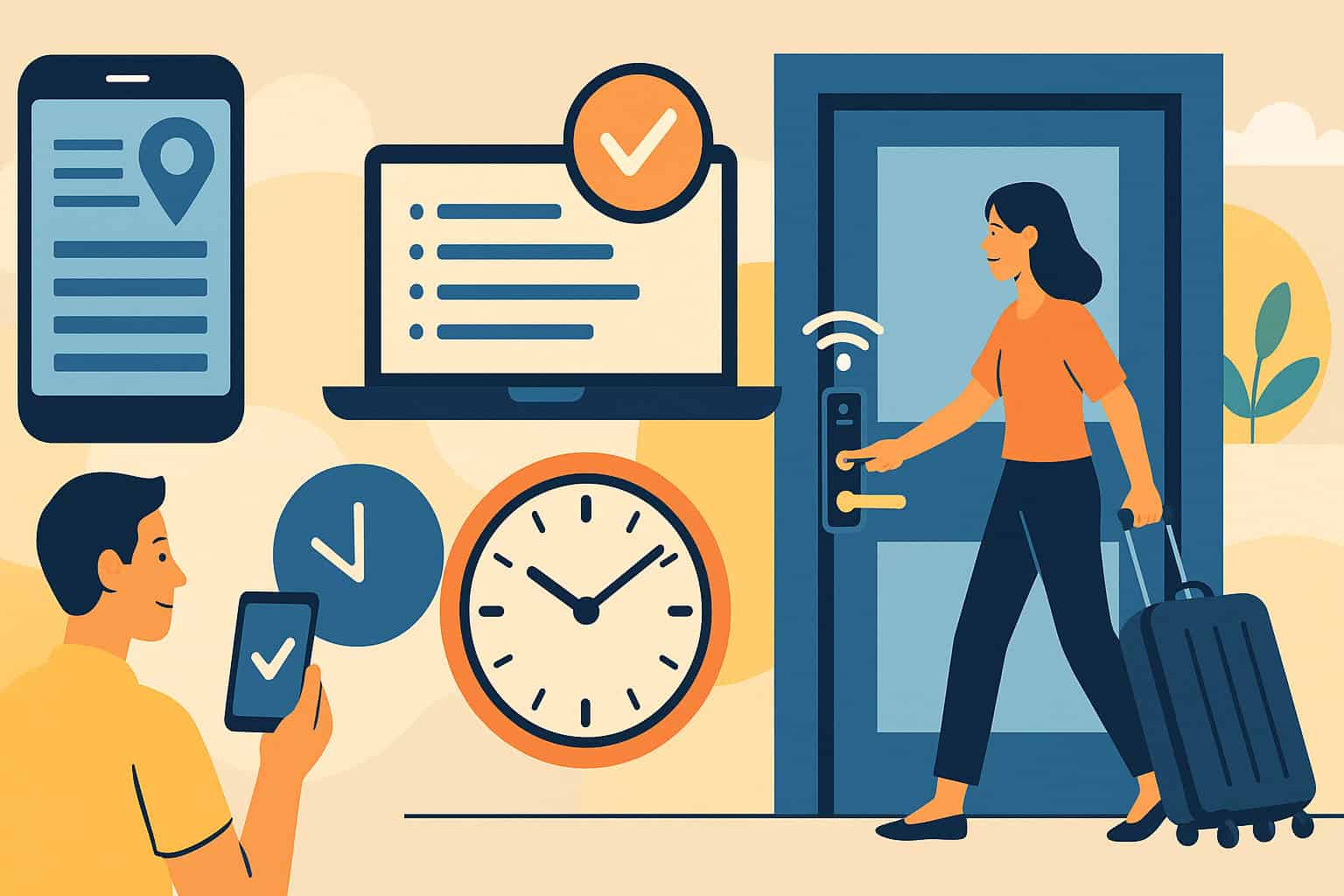
If there’s one truth about hospitality, it’s this: the stay starts well before the front door opens. Guests don’t remember your intake spreadsheet or back‑office calendar rules. They remember how easy it was to arrive, get in, and feel at home. In a maturing short‑term rental market with more choice and tighter margins, the check‑in and check‑out experience is one of the fastest ways to turn “fine” into five stars—or the other way around.
As the old saying goes, you never get a second chance to make a first impression.
Friction sprinkles doubt on moments that should feel effortless. Waiting for a code. Hunting for directions. Sorting out parking at night with grumpy kids in the back seat. These are small hurdles, but stacked together, they pull reviews down and increase support volume.
Operators who remove those micro‑frictions see fewer after‑hours calls, better first impressions, and stronger review velocity—signals that boost visibility on OTAs and your direct site.
A modern arrival has three pillars: clear, timed communications, reliable access, and fast resolution when something goes sideways. That sequence is perfect for automation.
Smart locks aren’t new, but the difference between “it usually works” and “it always works” is fleet‑grade hardware and rules.
With a platform like PointCentral connected through your PMS (see the full list of Track’s integration partners), you can auto‑generate door codes, limit access windows to reservation dates, and trigger housekeeping/maintenance codes as completed tasks. You also get event logs that help resolve “we couldn’t get in” disputes in minutes, not hours. That kind of data can help make things easier for the next guest.
Arrival questions are short and urgent, and AI is great at delivering such questions when it has the right context. Use AI reply suggestions inside Track guest messaging to detect the intent (e.g. “can’t find the condo”) and serve the exact snippet—map pin, door photo, parking PDF—without making a guest wait for a live agent. If a guest still needs help, route to an on‑call human with the conversation history attached.
Think of AI as the air‑traffic controller keeping arrivals smooth, not a replacement for a real, human welcome.
Check‑out is where you either end on a high note or risk a “great place, weird check-out process” type of review. Keep the to-dos simple and the tone grateful. A timed message the night before with a short list (thermostat, trash location, lock procedure) reduces anxiety for both sides while providing clarity about what’s expected. A second automated note after lock confirms receipt, thanks the guest, and requests a review with a direct link.
Apart from delivering great, Johnny-on-the-spot service to guests, automation earns you time. Spend it on the moments that matter: first‑time guests, VIPs, and guests with special requests.
A quick personal text the afternoon of arrival (“Welcome! I’m {{name}} if you need anything tonight.”) often prevents a support ticket later. It also supports owner relations because that first touch is where guests start to form an opinion about your brand—something owners see in reviews and revenue. Better to start on, and hold a high note than to try to rescue it later.
Low‑friction check‑in and check‑out isn’t about gadgets for their own sake. It’s a way to set the tone for how you operate. Fewer surprises for guests and fewer fires for staff to put out. It also offers better review velocity, which gooses the algorithms in your favor. With a platform such as PointCentral handling the door and Track orchestrating the messages and tasks, you turn a critical set of touchpoints into moments where guests feel, “They’ve got me.” That feeling is why they book again.
The other big upside of using automations and smart tools to help handle the bookends on a trip is the data you get. Many of these tools log information that you can mine later on to build a helpful profile of how easy it is (or isn’t) for guests to check in or out. Even small improvements that save a minute or two here and there or make guests feel more at home can pay dividends down the road.