
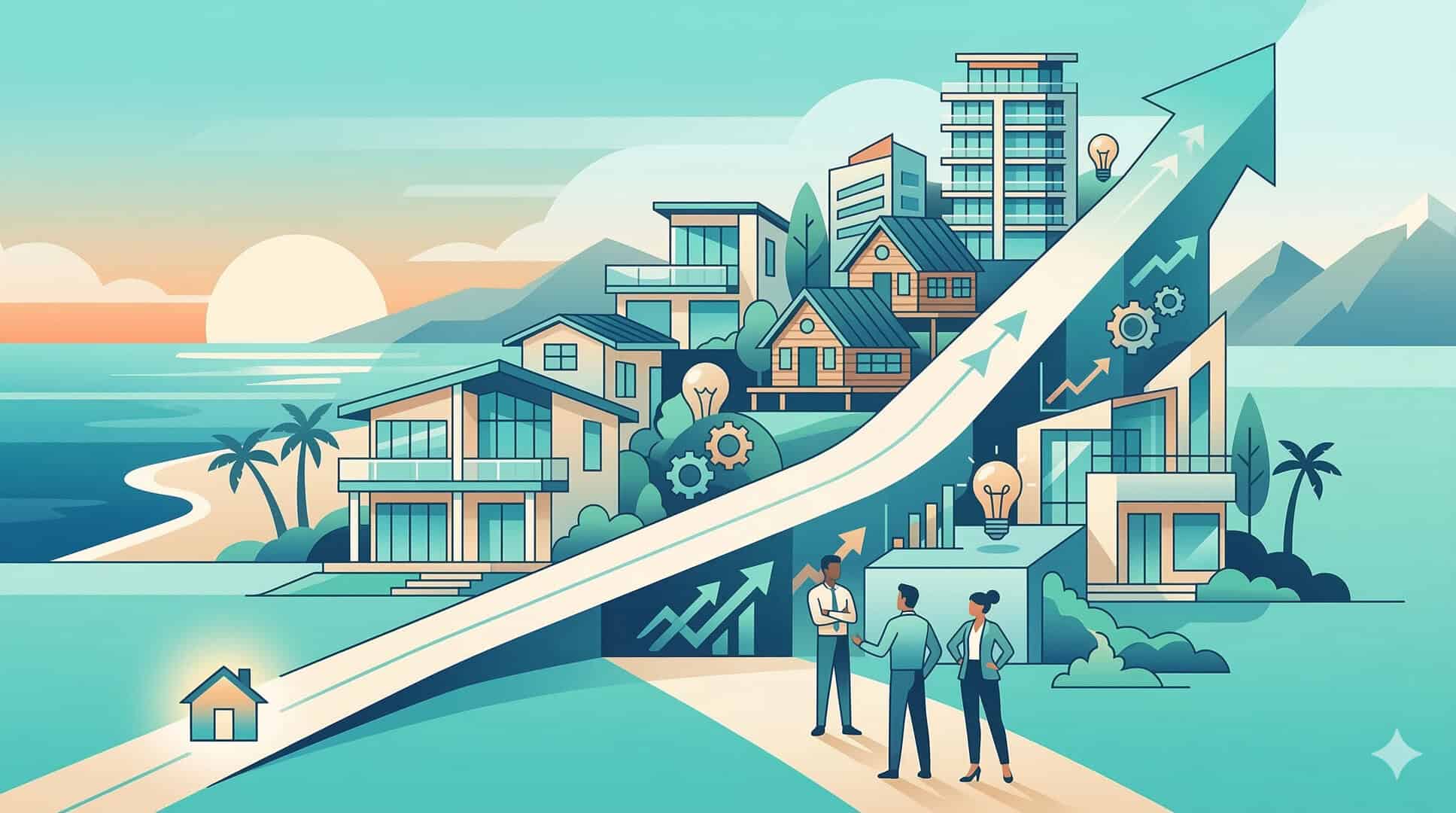
The vacation rental industry is in the midst of a clear paradigm shift. For years, you could survive on grit and a handful of good properties, but those “Wild West” days are officially over. The market has hardened. Between climbing insurance premiums, increasingly tight local regulations, and a labor market that feels more like a battlefield than a talent pool, “good enough” just … isn’t.
If you’re still operating, or frankly even thinking like a hobbyist, you’re unintentionally becoming a liability to your owners and your own future. The only way to navigate this complexity with total confidence is to embrace the era of professionalized hospitality. This doesn’t mean just getting bigger. It means getting better by treating your operation as a financial engine that demonstrates and projects sophistication.
Many property management companies find themselves fitting the description of what might be called an “accidental enterprise.” You’ve grown your revenue, staff, and portfolio to the point where you command some clear market authority. But your underlying systems are still a patchwork of “point solutions” that rely on clunky integrations to work together. The result is a brittle stack that sits on a shaky foundation. Without a unified architecture on a solid base, growth actually makes your life harder, not easier.
True professionalization starts with a shift in mindset. You have to stop viewing software as a utility and start seeing it as your architectural bedrock. This bedrock allows you to handle the weight of five hundred or more properties with the same grace and financial rigor as you handled fifty. The goal is to move from a state of constant reaction to a state of operational maturity in which you feel firmly supported by your technology.
Technology doesn’t exist for its own sake. It must serve the three pillars of your business: your employees, your owners, and your guests. If your current tools create friction for even one of these groups, your architecture is broken.
When you provide your team with workflows that actually work, you aren’t just making their jobs easier. You’re protecting your business from the high cost of turnover. When you provide owners with total transparency into their asset’s performance, you’re building a level of trust that no “mom and pop” shop can ever replicate through friendliness or earnestness alone. This level of financial resilience and responsibility is what defines the winners in the next era of hospitality.
Professionalization isn’t a destination you reach overnight. It’s a deliberate process of separating the signal from the noise so you can focus on high value outcomes.
If you’re ready to move beyond the hobbyist phase, here’s a roadmap to the next level:
This business requires a massive amount of heart, grit, and adaptability. But these traits alone won’t help you survive a market that is increasingly defined by professionalized hospitality. Your infrastructure and processes have to match your ambitions or there won’t be any weight behind your punch.
Nobody in this business started out with everything they needed to survive and grow. Chances are, you’ve been doing your own spinning-plate routine for years, maybe decades, as you recognized you were behind the curve then made painful changes in order to catch up. Rinse and repeat, maybe for decades. It can work, but it’s exhausting. At a certain point, you just want to throw your arms up and go, “Enough already!”
Choosing to professionalize is a choice to lead, not play catch-up. It’s a choice to stop fighting your own processes and start focusing on the things that make material differences in the short term AND protect you from long-term churn. When you build your business on a solid architectural bedrock, you aren’t just managing properties anymore. You’re creating a future where you can scale with total confidence, regardless of what the market throws at you.
Don’t confuse the professionalization of a hospitality business with merely being and acting professionally. If you’re reading this, you already do that.
We’re talking about narrowing the perceptual or practical gaps between you and the dominant players in your market. The more dominant the player, the deeper their pockets. The deeper their pockets, the more investments they make in the infrastructure, staffing, and process improvements that insulate themselves from instability while creating a professional sheen that guests can feel. Eventually, that sheen becomes the market expectation because you’re no longer following — you’re leading.
“Eventually” is now.
The good news is, matching or surpassing the professionalization of the dominant players is less about your investment capacity than your mindset in this pivotal moment. The hardest thing about implementing new tech or new processes is just deciding you can’t wait any longer. If you find yourself hesitating, ask yourself this final question: Does my operational architecture make me more or less confident in this market?
The answer will tell you everything you need to know. Once you see it, you can’t unsee it.