
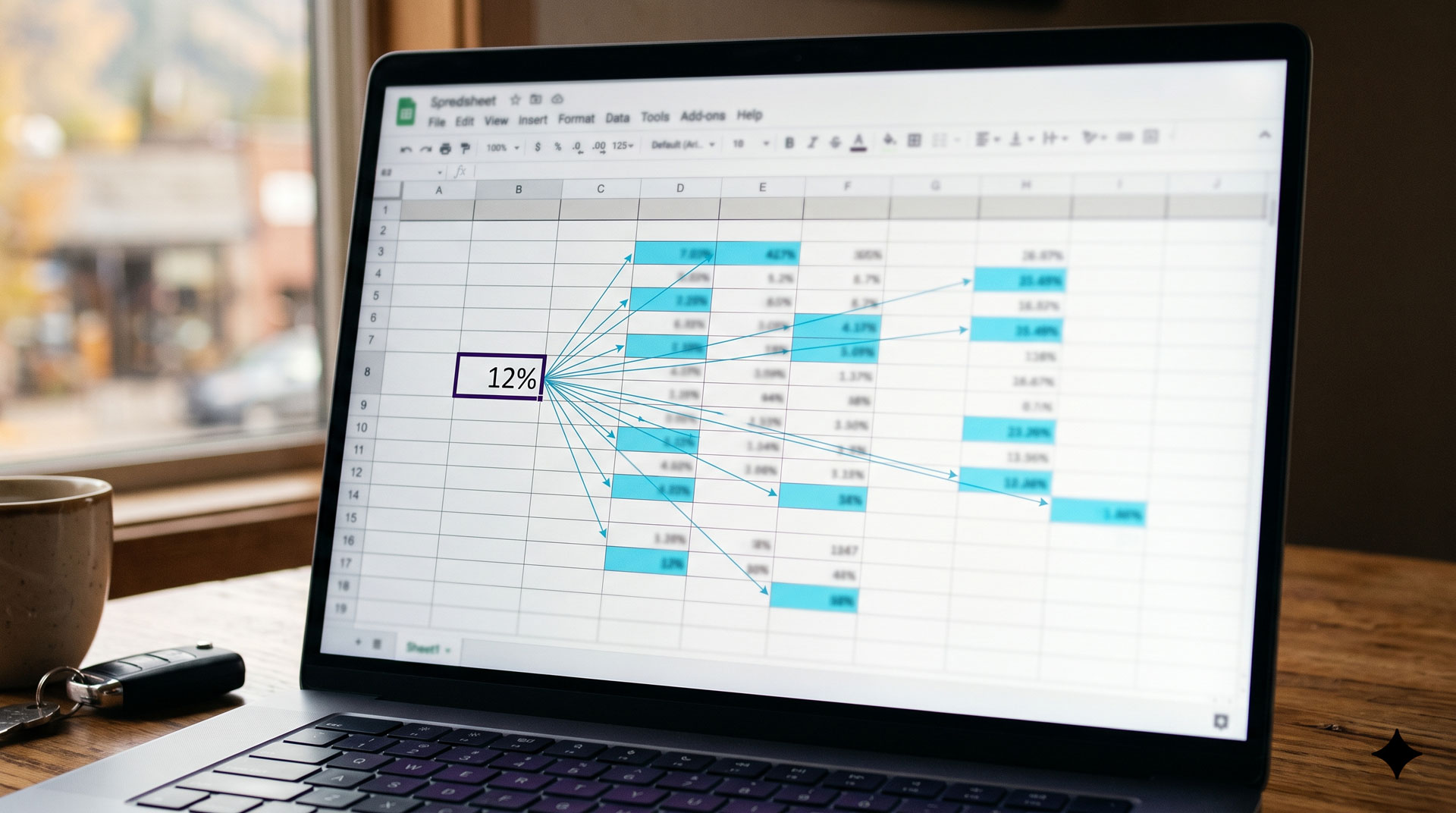
Vrbo is simplifying how it prices for hosts, and it’s a smart move. Beginning Oct. 29, 2026, all hosts transition to a single, transparent commission of 12%. Pay-Per Subscription is retiring, and when a host’s subscription expires, they move to pay-per-booking at the new rate. One number, no tiers to decode, and clear guidance for the partners who support hosts through the change. That kind of clarity is good for the whole industry.
A clearer fee can still change your math, though.
Take a three-night stay at $150 a night with a $100 cleaning fee. That’s a $550 booking. Under the old pay-per-booking model, the host commission on that stay was 5 percent, or $27.50. At 12 percent, it’s $66. That’s $38.50 more on one booking. Now picture 1,000 bookings like it in a year. That’s $38,500, and nobody budgeted for it.
Here’s the part worth sitting with: Vrbo did nothing wrong. Channels adjust their pricing all the time, and they will keep doing it. The real question is what happens inside your business when they do.
Most operators’ first instinct is to add the new commission to the price. It’s a fair instinct, but the math doesn’t quite work. Vrbo calculates its commission on the total the guest pays, including whatever you add to cover it.
Back to the $550 booking. Say you want to keep the full $550. If you add 12 percent ($66), the guest pays $616. Vrbo takes 12 percent of $616, which is $73.92. You net $542.08. You’re still $7.92 short.
That gap looks small on one booking. Across 1,000 bookings, a markup that looked right leaves $7,920 on the table. Every fee you add to cover a real cost quietly loses a slice to the channel.
Most operators land in one of three places on this.
The first is to absorb it. It’s the fastest option, and your margin takes the hit on every booking until someone runs the numbers at month end.
The second is to raise rates everywhere. It sounds tidy, but every channel has different math. Airbnb’s host fee runs about 15.5%. Vrbo’s is now 12. Your own website carries no channel commission at all. A blanket rate bump can overprice your direct site and still under-cover the channel that changed.
The third is to adjust your strategy by channel. This one takes more than a channel management tool.
Once you know the math, the next question is where the cost should land. Each channel has its own fee, its own guest, and its own price sensitivity. A plan that works across your whole mix looks like this:
Think of a channel management tool as a courier. It gets your rates, availability, and content to every channel, and it keeps them in sync. That’s valuable work. But a courier doesn’t decide which routes are worth the fuel.
When a channel changes its economics, a channel manager has nothing to say about it. It’s up to your team to open each channel, run the markup math, edit each fee, check each listing, and hope nothing drifts. For a portfolio with hundreds of units, that’s days of manual edits. Mistakes don’t show up as alerts. They show up as a guest complaint or a thin month.
Channel strategy is the dispatcher. It starts with knowing how you really perform on each channel and what each channel really costs you. From there, you can adjust fees and rates by channel, shift inventory toward the channels that earn their cost, and run promotions where they pay off. When the market moves, you change the plan in an afternoon instead of absorbing the cost for a quarter.
A channel management tool pushes your rates live and keeps them in sync. These capabilities are what turn that into a channel strategy.
Fair question: if you add the commission to the guest’s price, won’t they book somewhere else? Applied correctly, it usually doesn’t play out that way.
A recovery fee is a dial you tune per channel and per season. Where a channel is price sensitive, you recover less. Where demand is strong, you recover more. Many operators already set channel markups and fees by hand, and without expert guidance, they often overcharge guests without knowing it. A rough markup overshoots. Calculating the exact amount each channel needs means you recover what you need and nothing extra. In many cases, that lowers what your guest actually pays while still protecting your margin.
Recovery also works alongside everything else in your channel strategy. Sharper content, visible promotions, and trusted reviews all help convert lookers into bookers. Together, they drive more bookings. Across TrackDistribution customers, total reservation volume (direct and OTA combined) grew 11% in the first year.
That’s what we built TrackDistribution to do. It’s a channel strategy solution, and it runs natively on TrackPMS alongside our Direct Booking Solution so your channel and direct efforts work together. Operators using it see $7 returned for every $1 spent on distribution within the first year.
Vrbo’s update won’t be the last. Another channel will change its commission, its payment rules, or its promotion terms. Chances are it happens sooner than you think.
So ask yourself a simple question. When it does, can you adjust in an afternoon? Or will you absorb the cost while you work out a plan? The operators who stay ahead have a strategy that moves when the market does.
Want to see what your channel mix looks like under the new Vrbo rates? Talk to our team.
Already a TrackDistribution customer? Update your fee setup before the change takes effect for your account, and create a new fee profile instead of editing your current one so your historical reporting stays accurate. Vrbo has posted guidance for hosts in their Partner Dashboard and Help Center. If you want help making a plan, your customer success manager and the TrackDistribution team are ready to work through your channel mix with you and help you take action.